


Energy Central’s ‘Day 3’ at DistribuTECH looked very different from the first two — and that was entirely by design.
If you’ve been following along on LinkedIn, you’ve probably noticed I’ve been… prolific this week. Guilty as charged. When there’s this much good stuff happening, it feels almost irresponsible not to share it with the folks who couldn’t make it to San Diego (and even with those who are here but inevitably seeing a different slice of the conference). If I clogged your feed, sorry not sorry — I’d do it again in a heartbeat.
But you may also have noticed something else: Wednesday was quieter from me. That wasn’t because the energy dipped. It’s because I finally stopped being an observer and fully stepped into the role of participant.
Day 3 was about creating, not just consuming.
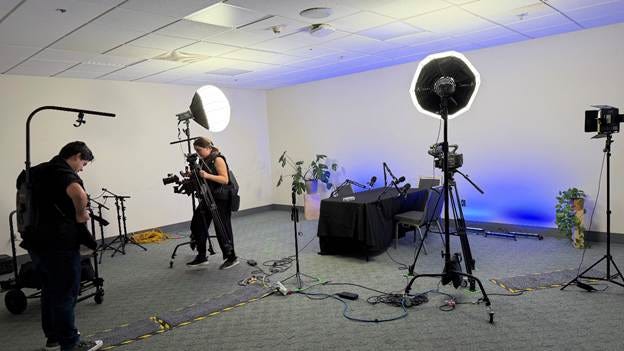
Energy Central was fortunate to spend the day linking up with three of our partners — IFS, Southwire, and Locusview — for a series of really special interviews. We didn’t half-step it either. We brought out the big guns: a full videographer crew on the show floor, a makeshift private podcast studio literally overlooking the entire DistribuTECH exhibition hall, and most importantly, thoughtful industry voices with real-world experience and something meaningful to say. Huge thanks to everyone who gave us their time and candor (Drew Pearson, Emily Witcher, Danny Petrecca, Lance Olmsted, Timothy Swanson, Tom Rahder, Kelsey Cook, and Marc Lamoureux) — these were conversations worth slowing down for.
Our team is already deep in the editing trenches turning those interviews around, so I won’t spoil the punchlines just yet. But a few themes have been echoing in my head ever since we packed up the microphones.
First: AI and DERs are finally being reframed — not as existential threats or runaway problems to “solve,” but as tools we already have in hand. The smartest voices aren’t panicking about the sky falling; they’re flipping the script and asking how to deploy these tools intelligently to make the hardest grid challenges more manageable. That mindset shift felt real this week.
Second: separating signal from noise matters more than ever. DTech always generates headlines, but the conversations that stuck were grounded in implementation. The differentiator isn’t who has the boldest vision — it’s who has actually put solutions in the field, learned from them, and iterated. These aren’t moonshots anymore. They’re operating reality.
Third: data still sits at the center of nearly every path forward — but simply having data is no longer something to celebrate. Cleaning it, sharing it across departments, agreeing on what it means, and continuously refining it is the real work. And crucially, there is no “mission accomplished” banner at the end. Data maturity is a living process, not a milestone.
The same holds true for the physical grid. Hardening, resilience, wildfire mitigation, and load growth aren’t one-and-done upgrades. They require speed and scale, yes — but not shortcuts. Not all equipment is built the same, not all solutions perform equally, and the only way utilities can navigate that complexity is by leaning into partnerships and expertise. That’s where gatherings like DTech earn their keep.
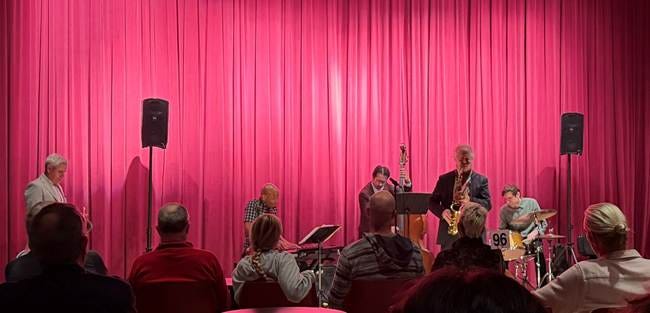
And fittingly, we capped the day with an after-hours jazz show as an Energy Central team — which felt like the perfect metaphor for the industry right now. When utilities, vendors, regulators, and technologists are all playing solo, it’s noise. But when everyone listens, adapts, riffs, and respects the rhythm? That’s when the magic happens. Sometimes you follow the chart. Sometimes you improvise. But it only works when you’re in the room together.
If any of these ideas resonate, keep an eye on Energy Central — on YouTube, Spotify, our newsletters, and EnergyCentral.com. We’ll be bringing you inside those conversations very soon.