


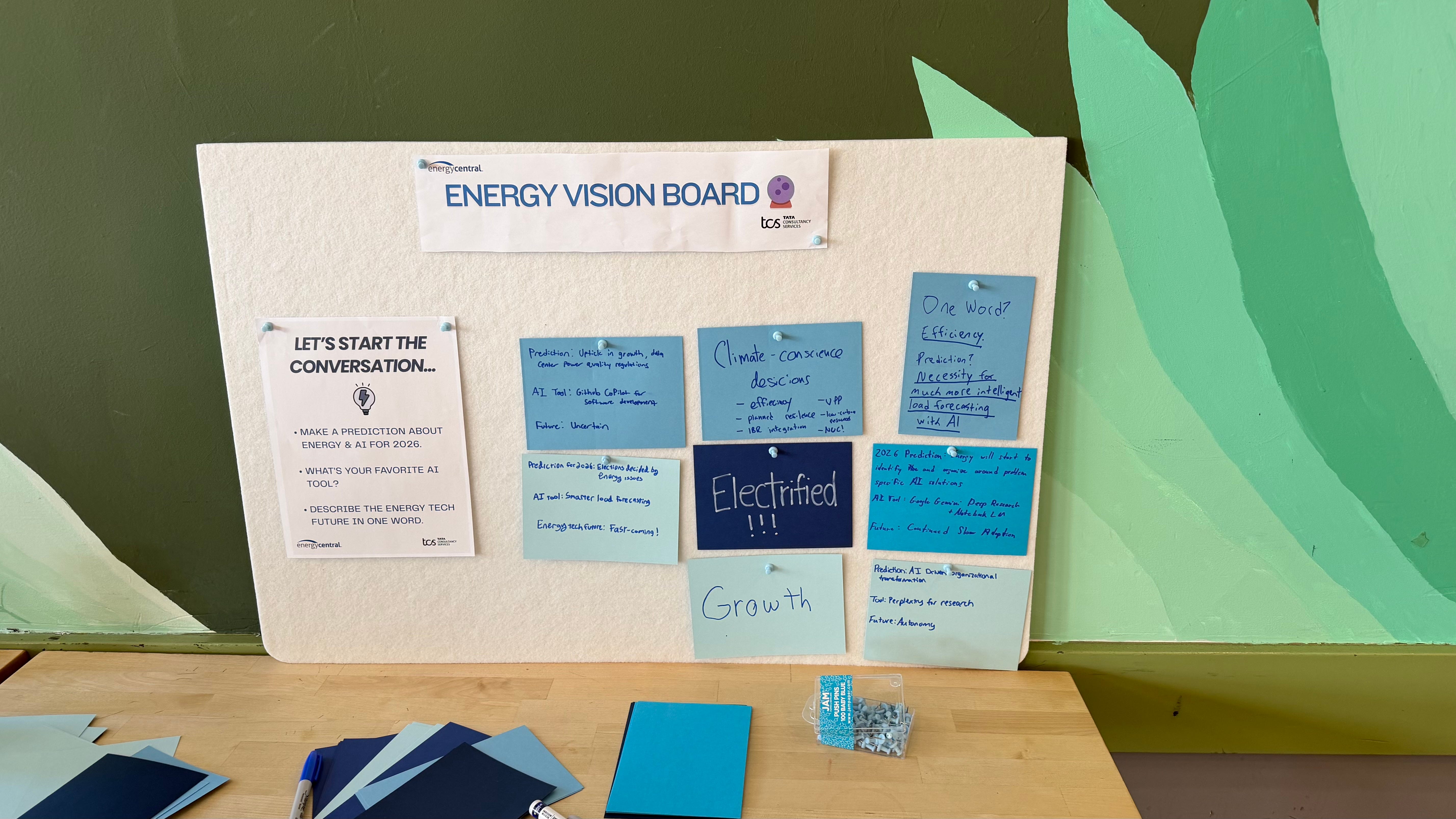
Day 2 at DistribuTECH felt like the moment the conference truly woke up: morning coffee conversations that actually mattered, a showroom floor bustling with demos and earnest problem-solving, and session rooms that made it clear people came to learn, not to posture. In a hat tip to the theme you’d hear in every corner of this week — AI — I fed my notes and quick hits to an AI assistant and asked it to distill the day. It did. I edited. The result: here’s what mattered most.
(So, thanks to SDG&E, who’s present at the conference: your infrastructure powered the AI brain behind this article, while the SD food scene powered Matt’s brain behind this article!)
First, the Energy Central breakfast set the tone. Folks wanted context before the chaos — defining terms (what exactly do we mean by “digitalization”?) and carving out time for real conversation rather than handshake theater. That framing echoed through the floor: people crave shared language and the smaller forums where difficult tradeoffs get honest attention.
The showroom floor drove home a practical point: the biggest problems of the sector (data center load growth, affordability, interconnection bottlenecks) don’t always come with a physical demo. Instead, the floor showcased the necessary building blocks — sensors, ADMS, GIS, outage detection, software, and AI tools — the pieces that, when stitched together, will let us manage huge new loads without breaking affordability. No single vendor “owns” the answer; this is a democratized puzzle that depends on partnerships and systems-level thinking.
And by the way, if ever there was a clear sign we’re at a fever pitch on affordability, it would be witnessing for the first time at DTech a group of local protestors seeking out and sharing their message about rates being too high to the conference center full of utility executives—that’s signal rising well above the noise!
Data came up everywhere, but AMI data stole the spotlight. CGI’s and Southern Company’s panel made the case you’ve been hearing across the industry: AMI is the foundational dataset everyone wants access to — but only if it’s clean, centralized, and usable. Legacy retirements, cloud platforms, AI analytics, and user-centric visualization are the playbook for turning AMI from “sexy” data into repeatable, enterprise-level capability.
AI itself was threaded through the heavy-hitter keynote with AWS, Duke, NERC, and Sempra — a tidy encapsulation of the conference question: will AI be our sector’s savior or our downfall? The take: AI is being framed as a teammate — a powerful co-worker that can remove signal blockers, optimize operations, and make forecasting and planning materially better. The caveat, repeated across panels: don’t AI-enable for the sake of it. The business case needs to come first.
DERs and affordability made for a powerful session: these resources aren’t optional extras anymore — they’re immediate levers to meet surging demand. The ask was blunt: scale faster, rethink interconnection and telemetry, and move from toleration to orchestration. If we can operationalize DERs at scale, the time to market and cost advantages are real.
Finally, wildfire risk conversations were sobering, urgent, and everywhere. The shift is clear: no one is framing this as a ‘California-only’ problem anymore, everyone wants to be proactive, and this is the one investment that seems to have near universal appeal (even among the high-stress affordability tug of war).
Day 2 left me optimistic and wired — lots of practical takeaways, fewer platitudes, and a stronger sense that the industry is ready to partner its way through the hard stuff. If you were at a session we missed, drop the highlights below — and if you spied anyone who would be a great commentator on Energy Central or guest on an upcoming Power Perspectives episode then give us a shout!
Couldn't be there this year, so thanks so much for the rundown! Kinda bummed I missed the protest though. :(